|
|
|
Career Opportunities Are Great in Horseshoeing
 |
By Doug Butler, PhD, CJF, FWCF
Horseshoeing is a great career with a promising future for those who like the work (we aren’t saying it will be easy)
and are willing to work hard to develop the skills necessary to become confident, competent farriers (yes, you have to work at it).
Professional farriers who are able, skilled, ethical and dependable are needed to help take care of America’s 10.31 million horses.
Through commitment and hard work, many successful farriers earn six-figure incomes.
The nature of the horse population and the reason for keeping horses has changed. The majority of America’s horses are kept for
pleasure or leisure sporting activities – yet the American Horse Council estimates the economic impact of the horse industry at $39 billion annually. Horses are big business.
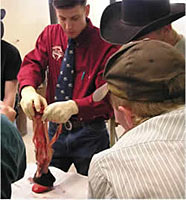
Horseshoeing is not only an art or skill, it is also a science. Knowledge of anatomy and physiology become a necessity when discussing, diagnosing and treating ailments with an educated professional
like a veterinarian. For this reason many people find it advantageous to attend a school or program that includes training in anatomy and physiology of the horse’s foot as well as shoeing. (The public
should feel as confident about their farrier as they do about their veterinarian or any other equine professional.) If you choose to enter the profession, decide to be an educated farrier!
Since ancient time, farriery has been considered the “master craft.” It is difficult to learn, requires the application of many skills, and must be consistently practiced over the course of a career. Your career, and even your entire life, will be influenced for better or for
worse by your choice of a school and its teachers. Good teachers will bring out the best in you by encouraging you and expecting
excellence from you. Often, the best and most successful farrier students are those with limited horse experience and a strong desire to
learn. Choosing a knowledgeable mentor and applying the lessons they teach will help new horseshoers become great tradesmen.
C
 |
hoosing a Horseshoeing School
There are about 50 public and private schools in America that offer some type of training in horseshoeing. These schools vary
tremendously in course content and length, instructor qualifications and skills knowledge, and hands-on learning experiences. Upon
completion, certification by a credible farrier organization is desirable but is not required to start a career as a farrier. Also, passing a certification test once doesn’t ensure competency.
In this trade, as well as many other careers, the way you start out is often the way you end up, so, it pays to get the best start possible.
Any horseshoeing school should be considered only an introduction to learning the horseshoeing craft. (This is one trade that takes a
lifetime to master!) You must take responsibility for your education and recognize that much of your learning will happen after you leave school. You will learn from each horse you shoe.
As a rule, you will get a better start by attending a private farrier school rather than one that is part of a public university (where
horseshoeing is often considered a non-academic subject). At a private school you will generally be given the opportunity to shoe
more horses, be more focused on results, and better have your special needs addressed (such as recognizing where you may be
struggling). A word of caution: Published claims that horseshoeing is “easy money” and “requires little or no training” are false and hurt
many horses as well as people. Anyone truly interested in becoming a successful, ethical farrier should avoid crash courses at all costs!
(Six weeks is considered to be the minimum time it takes to learn basic skills. Less time can be no more than an introduction.)
5 Keys to a Quality Farrier Training Program
There are 5 key factors to help a prospective student accurately evaluate the quality of a farrier training program: the teacher(s), the curriculum, the facilities, the community, and the cost.
The instructor(s) should have an impeccable reputation, be highly skilled, and be committed to effectively teaching students the craft.
Do the credible credentials include extensive training and experience? Have the teacher(s) actually run a successful farrier business?
Are they respected by their peers and is their work judged superior by other professionals? Do the teacher(s) continue to improve
their knowledge and skills by attending seminars and educational events? Reputation has value. What is the instructor’s and the school’s reputation in the horse industry?
The curriculum should allow you sufficient time to develop the essential skills necessary to help you be competitive in the marketplace.
Does the course emphasize mastery of the basics? Is the course organized and does it follow a systematic and sequential progression?
Is there a required textbook(s) and a daily schedule that is followed by the instructor(s)? Does it provide for learning skills in related
areas, such as welding, business management, horsemanship, blacksmithing, veterinary liaison, lameness diagnosis and mechanical treatment?
What is the student/teacher ratio? The lower the better.  Can you get help when you need it? Is the classroom and shop instructional
equipment adequate and in good repair? Are there adequate materials and supplies available for instruction and practice? Is clean, comfortable and reasonable room and board available?
Is there a wide variety of specialized horse breeds/types for students to shoe? Are there sufficient horses available for student practice? Are special problem horses shod by the
instructor with student assistance? Does the local community respect and support the school and allow students to work on their horses at the school under supervision? Can you get help when you need it? Is the classroom and shop instructional
equipment adequate and in good repair? Are there adequate materials and supplies available for instruction and practice? Is clean, comfortable and reasonable room and board available?
Is there a wide variety of specialized horse breeds/types for students to shoe? Are there sufficient horses available for student practice? Are special problem horses shod by the
instructor with student assistance? Does the local community respect and support the school and allow students to work on their horses at the school under supervision?
Compare what is included in the fee. Are all costs listed? How much income will you lose while you are attending school? (Part-time employment is out of the question when attending a
good farrier school because you typically will have responsibilities/assignments to complete on your own time.) Can you commit to several weeks away from home without non-emergency
interruptions? How much do regional or cultural differences affect you?
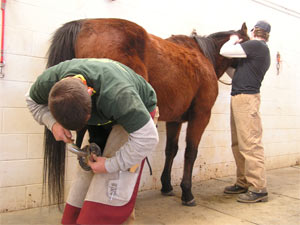 Farrier educators need to bring out the best in the character and talents that exist within each student. Teaching is the vibrant contact of one mind with another. One
-on-one interaction is required when learning a manual skill. A farrier without adequate training is like an untrained horse – he or she may hurt someone. A well
-trained farrier, like a well-trained horse, is most valuable. Farrier educators need to bring out the best in the character and talents that exist within each student. Teaching is the vibrant contact of one mind with another. One
-on-one interaction is required when learning a manual skill. A farrier without adequate training is like an untrained horse – he or she may hurt someone. A well
-trained farrier, like a well-trained horse, is most valuable.
Training is necessary for success. You must be motivated by a strong desire to
achieve. You must become a horseman as well as a blacksmith. Basic skills must be mastered and built upon before you can progress to higher levels in the farrier business.
You should carefully compare all the schools you are considering. Often, the best source of information on the quality of a particular trade school experience is the
recommendations of former students who are now successful professional farriers. Any school worth its salt should be willing to provide testimonials from students who have attended their program.
Once you’ve completed essential farrier training, it takes time and lots of practice to develop the proficiency necessary to become a
truly skilled craftsman. You will also need to invest in adequate tools, equipment and inventory of shoes and supplies. Learning how to
run a successful business and developing a business plan are also critical to your success. Finally, you must be patient, as it takes time
and consistent effort to build up a sustainable business. However, with dedication, excellent skills and a commitment to succeed, it is possible to earn a six-figure income as a farrier.
Butler Professional Farrier School
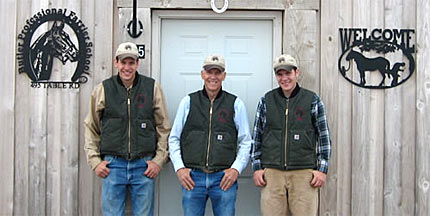
With more than 65 years of combined teaching and practical experience, the staff at Butler Professional Farrier School is committed
to teaching prospective farriers how to master skills and gain confidence in forging firm foundations for horses, farriers and life. Our
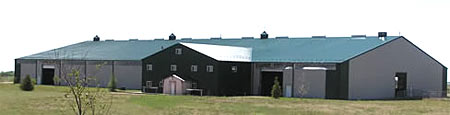
world-class facility provides the best learning opportunity and value for your education dollars available in professional farrier training
today. We have individual forging stations for students to practice shaping and fitting shoes to live horses’ feet, and we provide the
best working tools to learn with. We also have the largest collection of horseshoes, video case studies, teaching aides, and foot models in America.
At Butler Professional Farrier School our goal is to raise the standard of practice and promote the welfare of horses – feet first. We
work closely with students to produce qualified and motivated practitioners who are confident at their level of practice. Our students learn it right the first time!
|
|
|
|
|
|
|
To advertise your horse product or service, Contact Ann
|
|
|
|
InfoHorse.com, Horse Information Lives Here ®
4/23/2024
Contact Us to Advertise to over a million Horse Owners.
All images and content Copyright© 2023 by InfoHorse.com,
|
|
|
|
Articles, Academic Schools, Arena Maintenance, Animal Communicators, Barns, Barn and Accessories, Barn Equipment and Tractors, Breast Collars, Grooming Products for Horses, Hay Feeders, Horse Blankets, Horse Breeders, Horse Camping Gear, Career Schools, Horse Training Clinicians, Equestrian Clothing, Dogs and Puppies, Horse Fencing, Fly Control, Foal Care, Horse Footings, Horse Gifts, Horse Health and Nutrition, Hoof and Leg, Horse Insurance, Certified Trainers, Equine Lawyers, Leather Care, Links , Portable Horse Stalls, Arenas and Roundpens, Horse Riding Schools, Horse Schools, Safety Products, Services for Horses, Horse Trailers, Horse Shipping, Horse Skin Coat Care, Specialty Trainers, Horse Summer Camps, Tack, Horse Trainers, Treats and Snacks, Truck Accessories, Trucks, Horse Vacations, Western Lifestyle
|
|